
Laboratory system
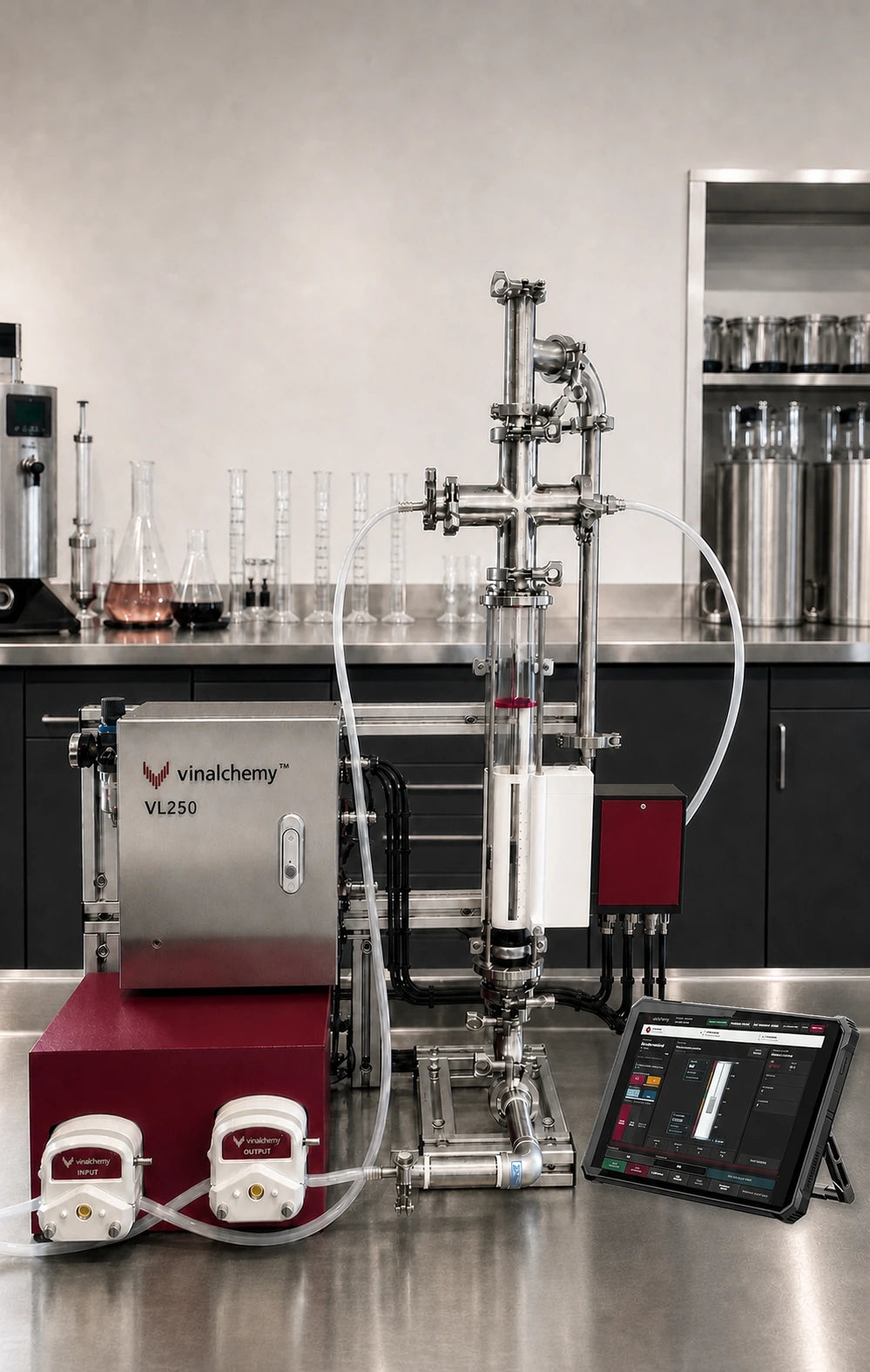
VL250
Create and compare treatment results on the actual wine at 250 mL/min.
The winemaker tastes, analyses and approves the endpoint.
CONTROLLED WINE AGEING TECHNOLOGY
Waiting is the conventional route to maturation. It also ties up cash, storage capacity and saleable stock.
Vinalchemy accelerates ageing-related reactions through a precise, low-oxygen process. Trial the actual wine on the VL250, taste and approve the result, then carry the approved treatment parameters into monitored V6000 production.
Your wine. Your decision. Your drinking window—reached sooner.
The VL250 creates the result. The winemaker approves it. The V6000 reproduces the approved treatment at scale.
Patent-granted technologyPrecision engineering. Controlled processing. Consistent results.
certainty over hope
Conventional MOX asks the winemaker to predict how the wine may develop over time. Vinalchemy lets the winemaker test the actual wine on the VL250, taste and refine the result immediately, approve the endpoint, then reproduce the approved treatment in V6000 production.
Run the actual wine through the VL250 at laboratory scale.
Judge the treated wine through your winery’s sensory and analytical process.
Adjust the treatment until the winemaker approves the desired profile.
Retain the approved treatment parameters and reconfirm them for controlled V6000 production.
MOX vs Vinalchemy
Conventional micro-oxygenation manages oxygen exposure while the wine develops over days, weeks or months. Vinalchemy creates a result the winemaker can taste, adjust and approve immediately, then reproduce the approved treatment in production.
With MOX The winemaker has to predict the result.
With Vinalchemy The winemaker tastes and approves it.
The 600x series
The VL250 creates the result on the actual wine. The winemaker approves it. The V6000 reproduces the approved treatment at winery scale.
Laboratory system
Create and compare treatment results on the actual wine at 250 mL/min.
The winemaker tastes, analyses and approves the endpoint.
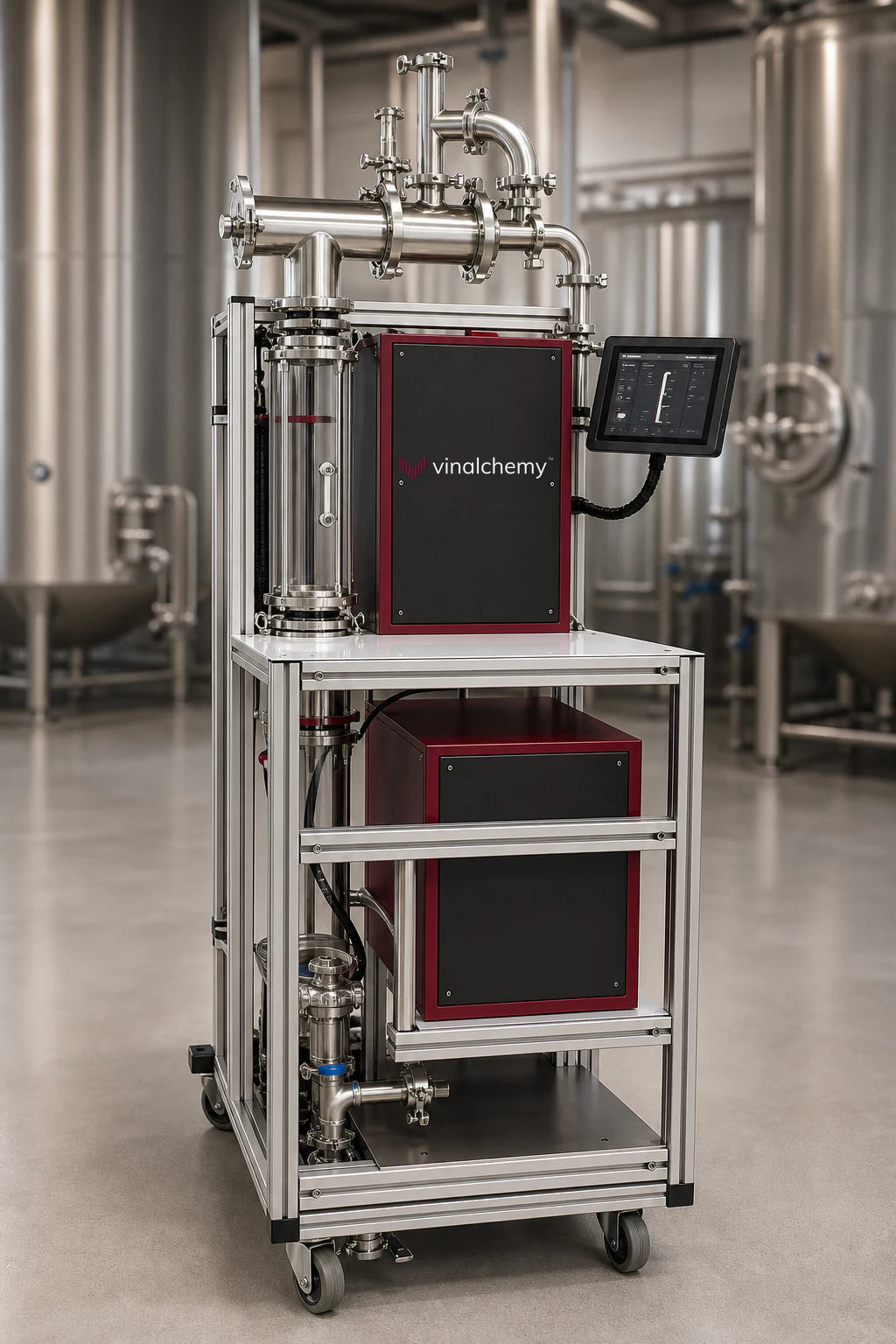
Winery-production system
Run the approved treatment at up to 6.00 L/min.
Up to approximately 9,000 litres per 24 hours, depending on the wine, approved programme and installed configuration.
Bespoke systems
Up to approximately 40,000 litres per day, subject to the wine, approved programme and installed configuration.
Designed around the required winery throughput and production route.
The standard V6000 and bespoke capacities describe different system configurations and are not interchangeable specifications.
Controlled at every stage
Vinalchemy brings controlled wine flow, precision gas delivery, continuous optical monitoring, approved treatment programmes and connected status reporting into one winery-processing platform—giving the operator live visibility and permitted adjustment within configured limits.
The approved operating programme remains the reference throughout the run.
Illustrative commercial opportunity
Wine waiting to mature can tie up cash, storage capacity and saleable stock. These illustrative models show how suitable wine streams may support more saleable output, shorter selected stockholding periods and earlier conversion of inventory to cash—without assuming a higher selling price.
Still-wine illustrative model
Sparkling-wine illustrative model
Separate illustrative UK models. Each uses 56,700 bottles annually and 50% treated, with selling price unchanged. The still example uses saleable utilisation of 60% → 65%. In the sparkling example, the legal nine-month bottle minimum and three-month post-disgorgement hold remain unchanged. The examples are not additive.
Illustrative results; not forecasts or guarantees. Working-capital release is a separate, one-off first-cycle effect and is not added to the annual figure. Results vary by wine, approved programme, winery costs, operating conditions, system configuration and commercial terms.
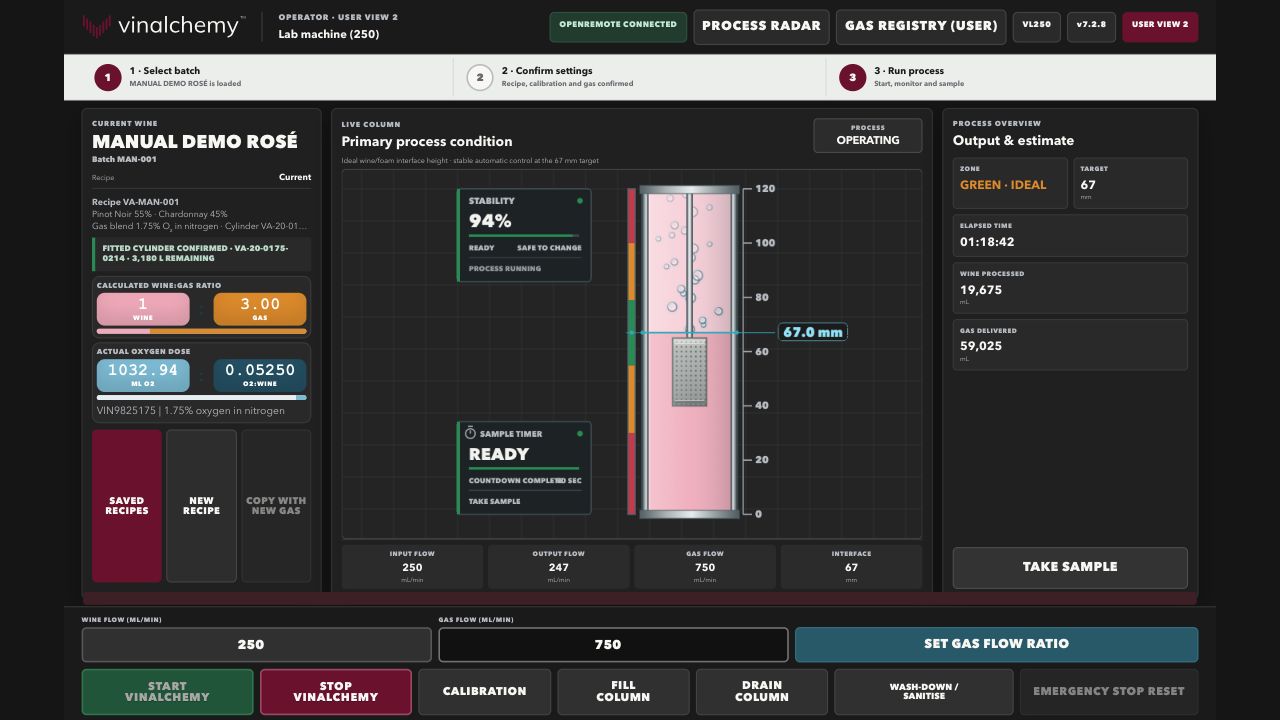
Connected process control
Select the batch. Confirm the approved treatment. Run and supervise.
Production planning, live optical status, exact-cylinder gas records, samples, service guidance, alerts and process history stay together in one governed operator journey.
Testing and evidence
A signed Plumpton evaluation reported statistically significant treatment-control differences in selected chemical metrics under the tested conditions and concluded that Vinalchemy accelerated ageing-related reactions. Its p < 0.05 result is conventionally described as greater than 95% confidence.
In a separate double-blind triangle sensory test on Plumpton Sparkling Rosé base wine, the treated wine was significantly different at p < 0.05.
A wine-specific starting point
Bring the wine, the endpoint you want and the numbers that matter to your winery. We will use them to shape a confidential assessment and, where appropriate, a VL250 demonstration or trial. You decide whether the result merits the next step.